
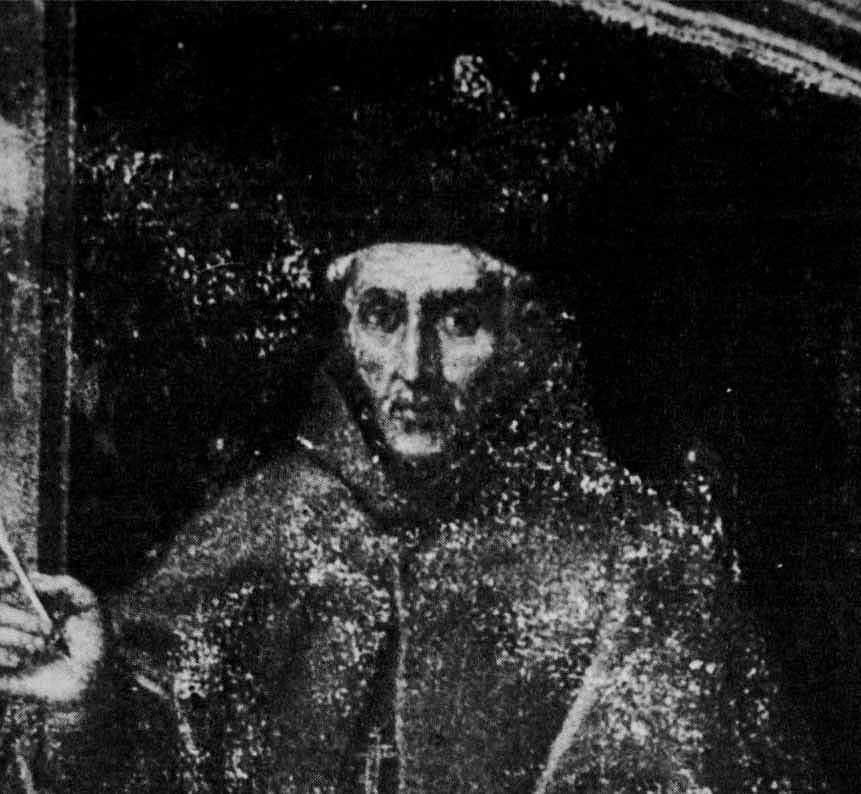
Guevara Antonio de
1481-1545
Available Works
![Libro primo [-terzo] delle lettere [...] Tradotto dal S. Domenico di Catzelu](https://res.cloudinary.com/ozscbgip/image/upload/c_limit,w_2560,f_auto,q_auto:good,e_sharpen:70/v1785836788/govi_stock/govi-guevara-lettere-1560.png)
history_eduBiography
Fray Antonio de Guevara (c. 1481 – 3 April 1545) stands as one of the most widely read, translated, and culturally influential prose authors of the European Renaissance. A Franciscan friar, royal chaplain, official court chronicler (cronista real), and imperial preacher to Emperor Charles V, who subsequently elevated him to the bishoprics of Guadix (1528–1537) and Mondoñedo (1537–1545), Guevara constructed a distinctive literary oeuvre that bridged late medieval moral didacticism, Christian humanism, Stoic philosophy, and courtly satire. His works—characterized by a highly stylized, balanced, and antithetical prose style—exerted an overwhelming impact on early modern European vernacular literature, shaping the development of Renaissance epistolary art, the political genre of the mirror for princes (speculum principis), the court-versus-country topoi, and early English prose aesthetics, most notably Tudor Euphuism.
Early Life, Noble Lineage, and Formative Education
Born in Treceño (in the Cantabrian region of Asturias de Santillana) around 1581, Antonio de Guevara belonged to a prestigious, albeit cadet branch of the aristocratic House of Guevara. His father, Juan Beltrán de Guevara, and his mother, Elvira de Noroña y Calderón, maintained ties to the high nobility of Castile. Details regarding his earliest years remain wrapped in the self-fashioning narratives of his own writings, but it is firmly established that his youth was spent in the environment of the royal court of the Catholic Monarchs, Queen Isabella I of Castile and King Ferdinand II of Aragon. There, Guevara received an elite courtly education alongside the royal pageboys, absorbing the chivalric, political, and early humanist ideals circulating in late fifteenth-century Spain.
Following the death of Prince Juan in 1497 and Queen Isabella in 1504, the young courtier underwent a profound spiritual crisis and decided to renounce his secular career. Around 1504, Guevara entered the Order of Friars Minor (OFM), joining the Observant Franciscan branch. He undertook rigorous theological, scholastic, and classical studies within Franciscan monasteries in Castile, quickly gaining recognition for his exceptional oratorical talents, legal acumen, and mastery of rhetoric. Within the order, he rose through the administrative hierarchy, serving as guardian of several friaries, provincial definitor, and custodian of the Franciscan province of Concepción.
Imperial Service: Court Preacher, Chronicler, and Diplomat under Charles V
Guevara's definitive entry into imperial politics occurred in 1521 when he was appointed court preacher (predicador real) to the young King Charles I of Spain (soon to become Holy Roman Emperor Charles V). During the turbulent period of the Revolt of the Comuneros (1520–1521), Guevara positioned himself as a steadfast defender of royal authority. He participated actively in diplomatic missions on behalf of the Crown, negotiating with the rebellious cities and drafting moralizing letters—such as his famous Epístola a los comuneros—admonishing the rebels to lay down their arms and submit to the emperor. His loyalty during the crisis solidified his standing at the imperial center.
In 1526, Charles V appointed Guevara to the prestigious position of Imperial Chronicler (Cronista Real) and royal chaplain. In this capacity, Guevara accompanied the imperial court on its restless itineraries across Spain, Italy, and North Africa. He was present at the historic Cortes of Toledo, Madrid, and Valladolid, and attended Charles V during his triumphant campaign against the Ottoman-backed corsair Hayreddin Barbarossa in the Conquest of Tunis in 1535. Guevara's proximity to the monarch allowed him to observe firsthand the inner workings of imperial diplomacy, courtly sycophancy, and military strategy, providing the empirical raw material for his political treatises and courtly satires. His royal favor culminated in his promotion to the episcopate: first as Bishop of Guadix in the Kingdom of Granada (1528), where he worked to enforce religious conformity among the newly converted Moriscos, and later as Bishop of Mondoñedo in Galicia (1537), where he governed until his death in 1545.
Major Literary Works, Ideology, and Pseudo-Historical Method
Guevara’s literary production ranks among the most published and republished in sixteenth-century Europe. His debut work, the Libro áureo de Marco Aurelio con el Relox de príncipes, was born out of a long composition process. Initially compiled in the mid-1520s as an invented biography and fake letter collection attributed to the Roman Emperor Marcus Aurelius, an unauthorized draft was pirated and published in Seville by the German typographer Jacobo Cromberger in 1528. Deeply incensed by this pirated release, Guevara thoroughly expanded and restructured the text, officially publishing the definitive version as the Relox de príncipes (Clock of Princes) through the royal printer Nicolás Tierri in Valladolid in 1529.
The Relox de príncipes is a monumental example of the Renaissance speculum principis. Presented as a newly recovered classical biography of Marcus Aurelius, the work fuses Stoic philosophy, Christian morality, advice on governance, war, justice, and marital duties. Crucially, Guevara employed a technique of deliberate pseudo-epigraphy and historical invention: he manufactured classical citations, forged ancient laws, and invented historical episodes to serve his moral and political arguments. For Guevara, historical truth was subordinate to moral pedagogical utility. Through Marcus Aurelius, Guevara offered Charles V and early modern rulers an ideal model of the philosopher-king who balances absolute imperial prerogative with self-restraint, justice, and Christian piety.
In 1539, while residing in Valladolid, Guevara oversaw the printing of a masterly cluster of four distinct works: Epístolas familiares (First Part, with the Second Part published in 1541), Menosprecio de corte y alabanza de aldea, Aviso de privados y doctrina de cortesanos, and De las vidas de los diez Césares. The Epístolas familiares (Family Letters) represented a crucial milestone in European epistolary literature. Blurring the boundary between real correspondence and fictional essayism, these letters addressed contemporary historical figures, aristocrats, and intellectuals on subjects ranging from medical advice and anti-courtly satire to classical philosophy, antiquarian curiosities, and moral theology.
In Menosprecio de corte y alabanza de aldea (Scorn for the Court and Praise of the Countryside), Guevara articulated the classic Renaissance antithesis between the corrupting, deceptive atmosphere of the imperial court and the peaceful, virtuous life of rural retreat. Drawing upon Horatian (beatus ille) and Stoic topoi, the book offered a penetrating psychological critique of ambition, power, and courtly anxiety, resonating deeply with readers across a bureaucratizing Europe. Simultaneously, his Aviso de privados y doctrina de cortesanos provided a pragmatic, cynical, yet morally framed manual for royal favorites, exploring the perilous dynamics of proximity to sovereign power. Towards the end of his life, Guevara returned to explicit theological composition, producing the Monte Calvario (Part I, 1545; Part II, posth. 1550), a monumental Franciscan treatise on the Passion of Christ that combined affective meditation with patristic erudition.
Printing History, Typographical Context, and International Circulation
The material production and print circulation of Guevara's works represent a phenomenal success story in early modern publishing history. His texts were magnificent commercial successes for printers across the Iberian Peninsula, Flanders, France, Italy, and England. The premier Iberian print workshops—including those of Nicolás Tierri and Juan de Villaquirán in Valladolid, Juan Cromberger in Seville, and Miguel de Eguía in Alcalá de Henares—issued numerous folio and quarto editions of his complete works throughout the 1530s and 1540s.
Driven by an insatiable European demand for Spanish imperial culture, major typographical centers across Europe quickly began producing vernacular translations and Latin adaptations. In Antwerp, the presses of Martin Nuncio (Martin Nutius) and Johannes Steelsius regularly printed Spanish and translated editions to supply the Flemish and Northern European markets. In France, the renowned Lyonnese publishers Jean de Tournes and Guillaume Rouillé, along with Paris printers, produced elegant octavo and duodecimo editions translated by Antoine de Alaida, René Binet, and later Antoine de Belleforest. In Italy, Gabriel Giolito de' Ferrari and Vincenzo Valgrisi in Venice published influential Italian translations rendered primarily by the Spanish expatriate scholar Alfonso de Ulloa.
The English printing landscape was similarly transformed by Guevara. Lord Berners (John Bourchier) translated the Golden Book of Marcus Aurelius (published posthumously in 1535 by Thomas Berthelet), which became an immediate best-seller at the Tudor court. This was followed by Sir Thomas North’s monumental translation, The Diall of Princes (1557), printed by John Wayland. North’s translation served as a primary stylistic model for Elizabethan writers. The intricate, highly structured prose style of Guevara—replete with rhetorical parallelisms, balanced clauses, antitheses, and elaborate metaphors—was directly adopted and amplified by John Lyly in his 1578 novel Euphues: The Anatomy of Wit, thereby giving birth to the literary style known as Euphuism.
Critical Reception, Historical Controversies, and Enduring Legacy
While Guevara achieved unprecedented popularity during his lifetime, his penchant for historical fabrication provoked fierce contemporary polemics. The most famous attack came from the Valencian humanist Pedro de Rhua, a professor of rhetoric at Soria. In a series of famous critical letters (Cartas a Fray Antonio de Guevara, 1540–1548), Rhua rigorously exposed Guevara’s historical inaccuracies, fabricated classical citations, and forged ancient inscriptions. Rhua demanded that as an imperial chronicler, Guevara adhere strictly to historical truth rather than publishing moral fictions passed off as ancient history. Guevara treated these attacks with courtly disdain, maintaining that his primary objective was moral instruction rather than pedantic antiquarian accuracy.
In modern historiography and literary scholarship, Guevara’s reputation has undergone significant re-evaluation. Marcelino Menéndez y Pelayo recognized him as a master of Spanish prose, albeit flawed by excessive rhetorical ornamentation. Américo Castro analyzed Guevara as a quintessential figure of Spanish Renaissance contradiction, caught between the imperial court and Franciscan asceticism. Later scholarship by Augustin Redondo, José Antonio Maravall, and Asunción Rallo Gruss re-established Guevara as a brilliant political ideologist and rhetorical innovator who understood the power of print media to shape public opinion and elite consciousness in Renaissance Europe. Today, Antonio de Guevara is celebrated as a pivotal architect of early modern European prose, whose writings provide an indispensable lens into the imperial ethos, literary taste, and philosophical anxieties of the sixteenth-century world.
menu_bookBibliography
Rhua, Pedro de. Cartas de Pedro de Rhua a Fray Antonio de Guevara sobre las obras de este. Edited by Manuel Rivadeneyra. Biblioteca de Autores Españoles, Vol. 13. Madrid: Imprenta de Rivadeneyra, 1850 [orig. pub. 1549].
Menéndez y Pelayo, Marcelino. Historia de las ideas estéticas en España. Vol. 2. Madrid: Imprenta de A. Pérez Dubrull, 1884, pp. 112–145.
Thomas, Henry. "The English Translations of Guevara's Relox de Príncipes." Revista de Filología Española 5, no. 1 (1918): 33–56.
Castro, Américo. "Antonio de Guevara: Un hombre y un estilo del siglo XVI." Boletín de la Real Academia Española 28 (1948): 63–89.
Gibbs, J. S. "The Prose Style of Antonio de Guevara." Modern Language Review 46, no. 3 (1951): 375–388.
Redondo, Augustin. L'affrontement chrétien-musulman dans l'œuvre de Antonio de Guevara. Paris: Centre de Recherches Hispaniques, 1968, pp. 15–48.
Grey, Ernest. Guevara, a Forgotten Renaissance Author. The Hague: Martinus Nijhoff, 1973.
Redondo, Augustin. Antonio de Guevara (1480?–1545) et l'Espagne de son temps: De la carrière courtisane aux œuvres ético-religieuses. Geneva: Librairie Droz, 1976.
Rallo Gruss, Asunción. Antonio de Guevara en su estilo: Estudio de la prosa del "Relox de Príncipes". Málaga: Publicaciones de la Universidad de Málaga, 1979.
Maravall, José Antonio. Utillaje ideológico y mentalidad política en Fray Antonio de Guevara. Madrid: Instituto de Estudios Políticos, 1981.
Costes, René. "Antonio de Guevara: Sa vie, son œuvre et son temps." Bulletin Hispanique 85, no. 2 (1983): 140–182.
Blanco, Emilio. La historiografía fingida de Fray Antonio de Guevara. Madrid: Editorial de la Universidad Complutense, 1994, pp. 45–92.
Horaro, Maria. "Ideologia e retorica nelle Epístolas familiares di Fray Antonio de Guevara." Aevum 71, no. 3 (1997): 789–812.
Vian Herrero, Ana. "La invención del marco epistolar en Guevara: Retórica y corte." Criticón 84 (2002): 45–72.
Rivero Rodríguez, Manuel. "La sombra del Emperador: Fray Antonio de Guevara y la corte de Carlos V." Cuadernos de Historia Moderna 29 (2004): 101–128.
Prieto, José Manuel. Fray Antonio de Guevara: Retórica, historiografía y poder en el Renacimiento español. Salamanca: Ediciones Universidad de Salamanca, 2012, pp. 115–160.
The biographies and bibliographies on this page are curated by Abu, the new AI scholar exclusively developed for Govi Rare Books.